IVL Hosts WCEF Side Event on Life Cycle Thinking and Circular Value Chains 丨IVL举办WCEF边会,共话生命周期思维与循环价值链
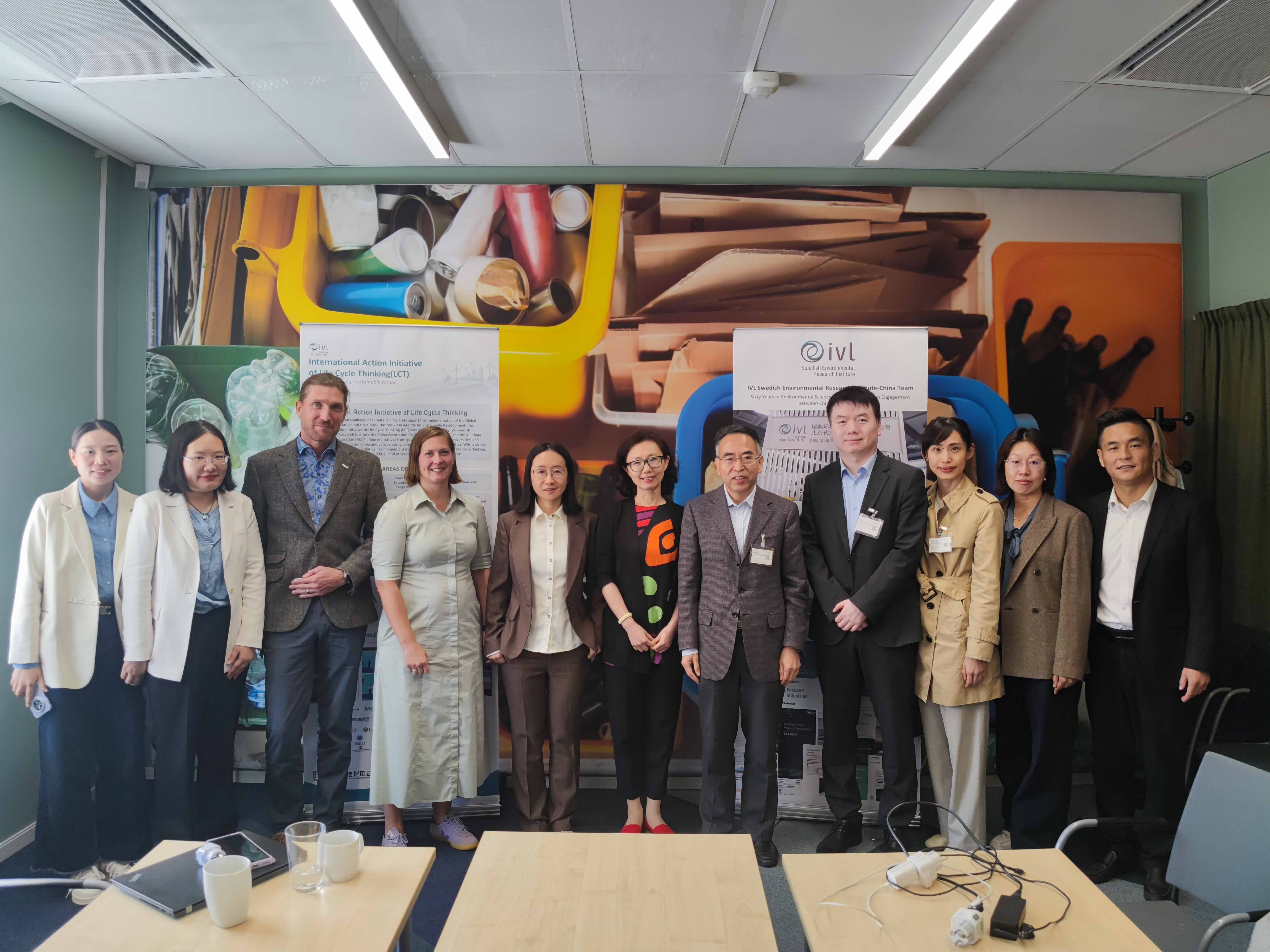
On 2 September 2026, IVL Swedish Environmental Research Institute hosted the World Circular Economy Forum (WCEF) side event “Life Cycle Thinking and Circular Value Chains: From Global Trends to Industrial Action” at its Stockholm office. Co-organised by the Swedish Chamber of Commerce in China and the China Association for International Science and Technology Cooperation (CAISTC), the event coincided with IVL’s 60th anniversary and 40 years of engagement in China. Held in a hybrid format, it brought together representatives from government, international organisations, research institutions, industry associations and companies to discuss sustainability trends, credible low-carbon value chains and the coordinated transition of transport value chains.
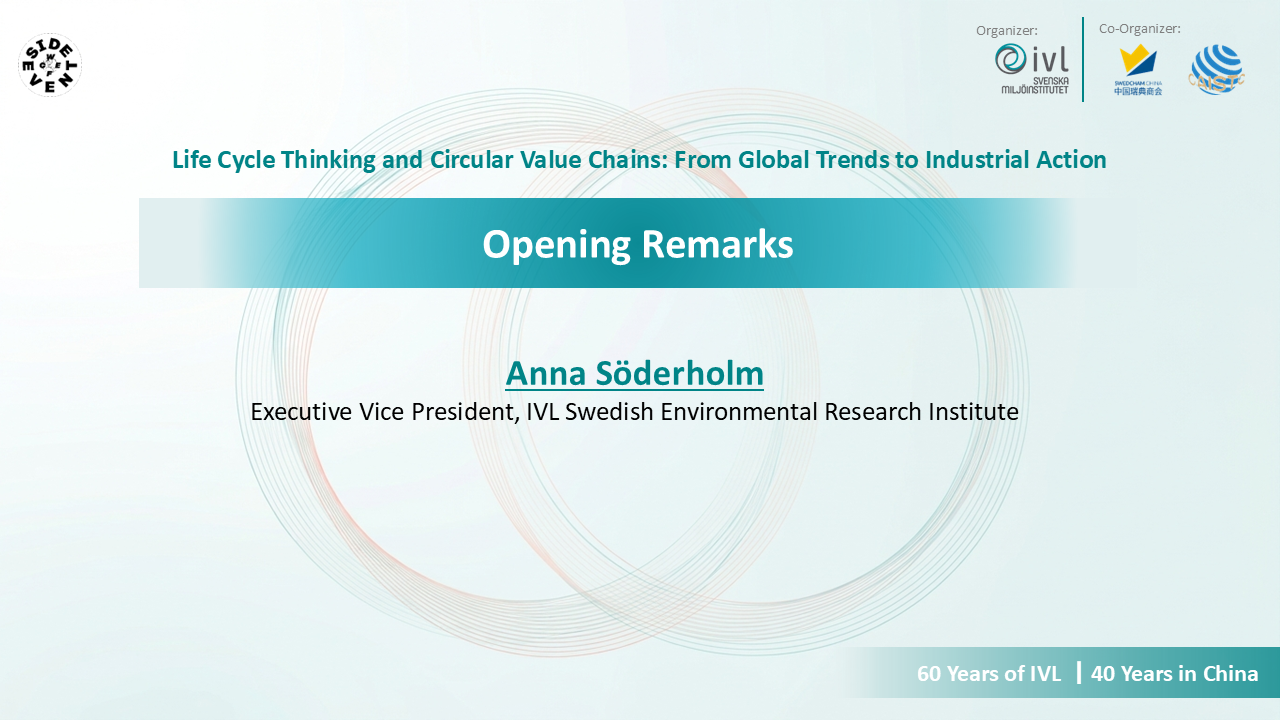
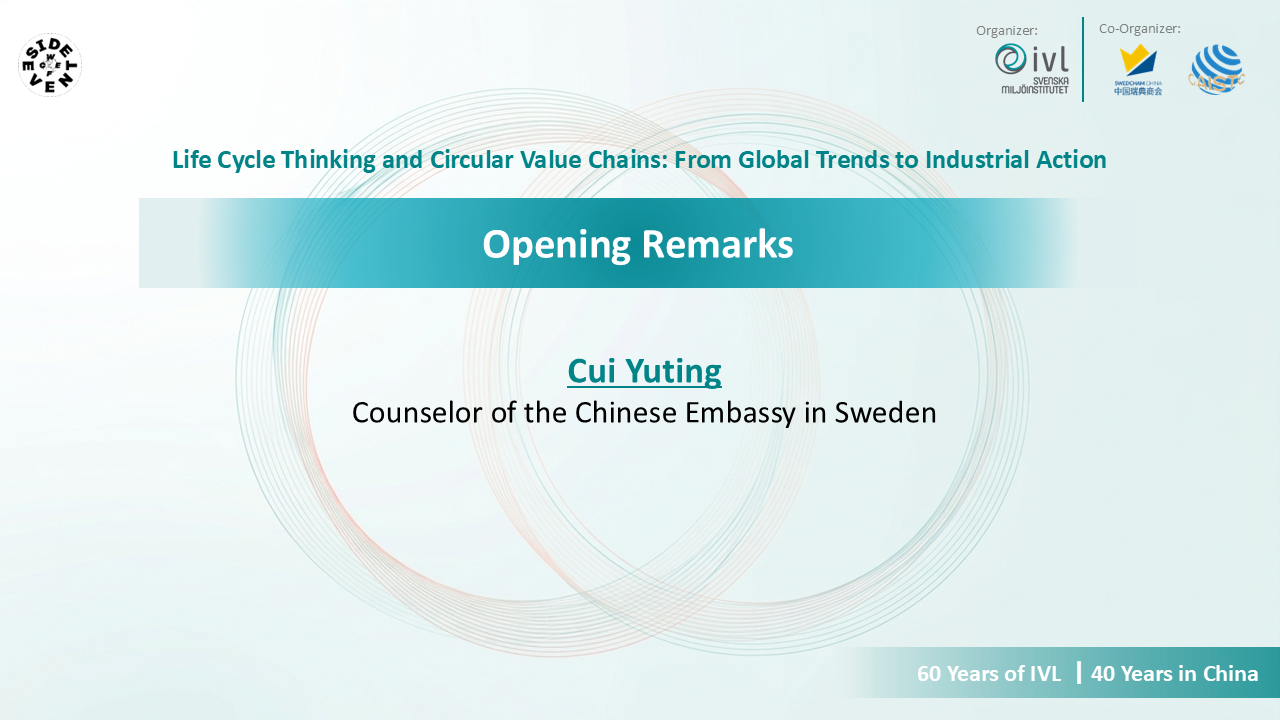
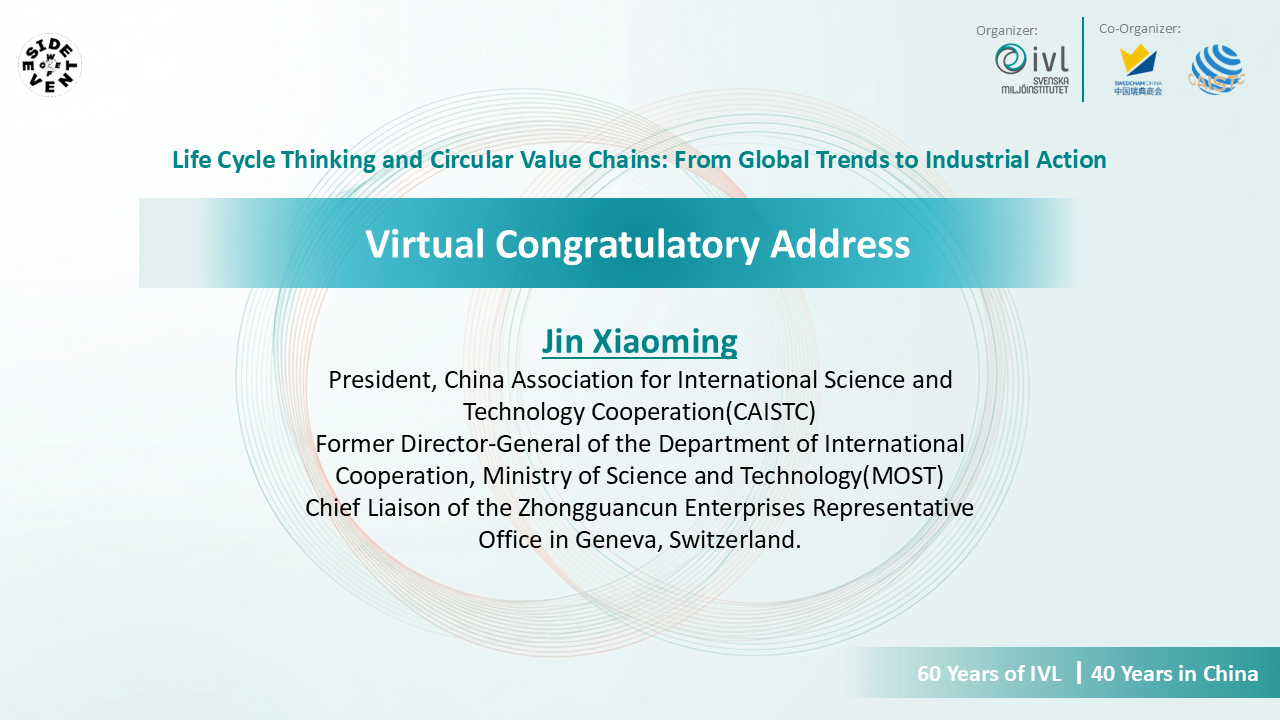
Anna Söderholm, Executive Vice President of IVL Swedish Environmental Research Institute, and Yuting Cui, Science and Technology Counsellor at the Embassy of the People’s Republic of China in Sweden, delivered opening remarks. Söderholm said that life cycle thinking requires decision-makers to consider the full value chain, avoid sub-optimisation, and advance the circular transition through reliable data, transparent rules and cross-sector collaboration. Cui noted that China and Sweden have a strong foundation for cooperation on carbon footprint accounting and the green and low-carbon transition, with scope to deepen mutual recognition of standards, joint research, industrial cooperation and talent exchange. Xiaoming Jin, President of CAISTC, delivered a virtual congratulatory address, recognising IVL’s long-standing work in environmental science, life cycle assessment, the circular economy and green supply chains, and expressing hope for further practical cooperation between China and Europe in areas including low-carbon development and water resources.
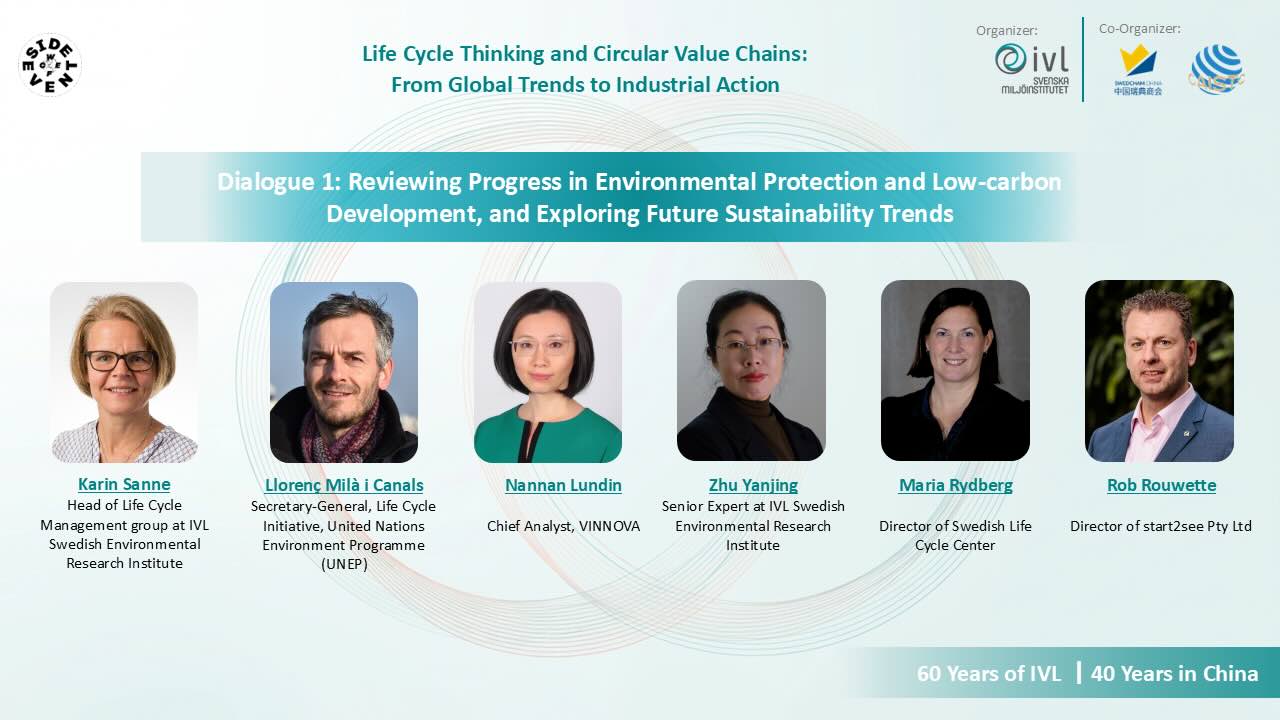
The first panel was moderated by Karin Sanne, Head of the Life Cycle Management Group at IVL. Participants included Llorenç Milà i Canals, Secretary-General of the Life Cycle Initiative at the United Nations Environment Programme (UNEP); Yanjing Zhu, Senior Expert at IVL; Maria Rydberg, Director of the Swedish Life Cycle Center; Rob Rouwette, Founder and Director of start2see Pty Ltd; and Nannan Lundin, Chief Analyst at Vinnova. Titled “Reviewing Progress in Environmental Protection and Low-carbon Development, and Exploring Future Sustainability Trends”, the panel examined trends and practical challenges in LCA data. As institutional frameworks develop and digitalisation and artificial intelligence advance, life cycle thinking is increasingly becoming part of day-to-day decision-making. However, fragmented data and uncertainty about data quality remain. Against this backdrop, funding organisations have broadened their focus to sustainable supply chains and are coordinating support for technology exploration, demonstration and scale-up.
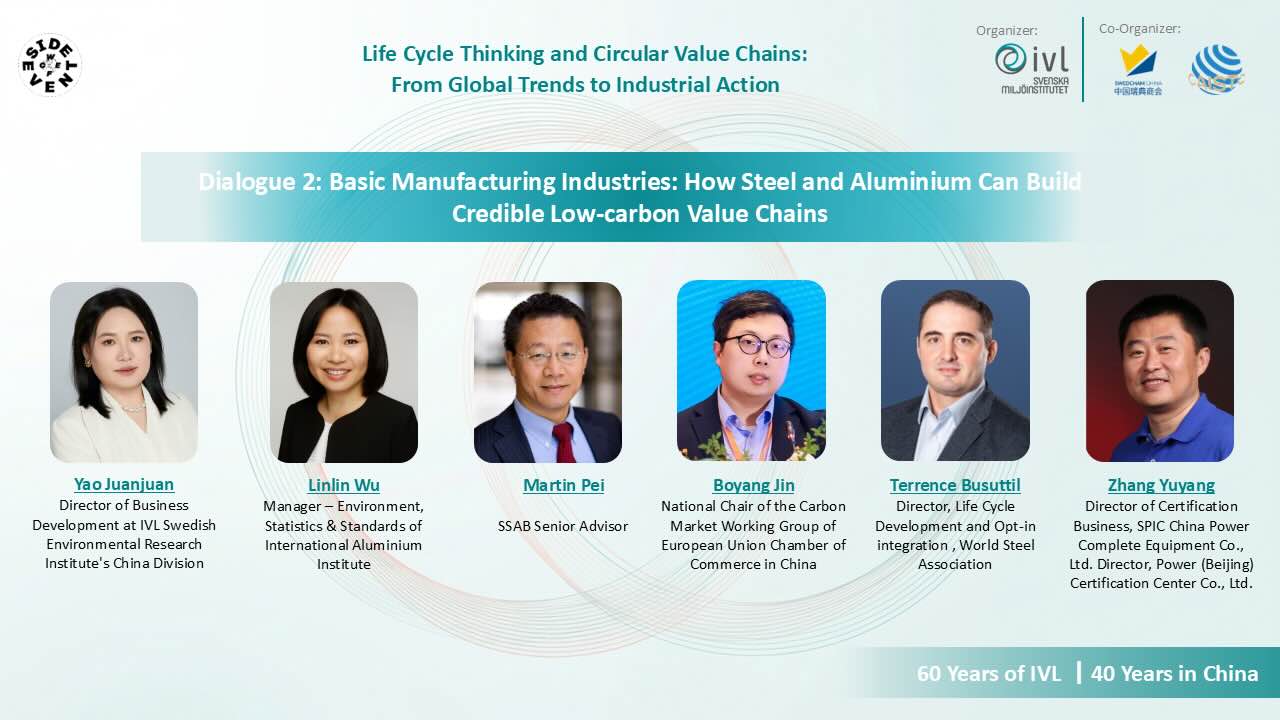
The second panel was moderated by Juanjuan Yao, Director of Business Development at IVL China. Participants included Linlin Wu, Manager for Environment, Statistics and Standards at the International Aluminium Institute; Martin Pei, Senior Advisor at SSAB; Terrence Busuttil, Director of Life Cycle Development and Integration at the World Steel Association; Boyang Jin, National Chair of the Carbon Market Working Group at the European Union Chamber of Commerce in China; and Yuyang Zhang, Director of Certification Business at SPIC China Power Complete Equipment Co., Ltd. and a Board Director of Power (Beijing) Certification Center Co., Ltd., together with his team member Bo Xie. The panel focused on “Basic Manufacturing Industries: How Steel and Aluminium Can Build Credible Low-carbon Value Chains” and discussed technical pathways, data foundations and rule alignment for the deep decarbonisation of basic materials. Deep decarbonisation in the steel and aluminium sectors requires parallel progress in reducing electricity- and process-related emissions, transforming primary material production, expanding circularity and improving product design. Clear system boundaries and consistent accounting principles are also needed to prevent double-counting of recycling benefits. Limited interoperability between accounting systems, differences between Chinese and EU rules, and uncertainty over the recognition of green electricity attributes continue to create compliance pressure. Greater alignment is needed in monitoring, reporting and verification (MRV), recognition of verification bodies, reuse of EPD data and digital reporting. Green procurement and supply-chain platforms can then help transmit low-carbon requirements upstream and downstream.
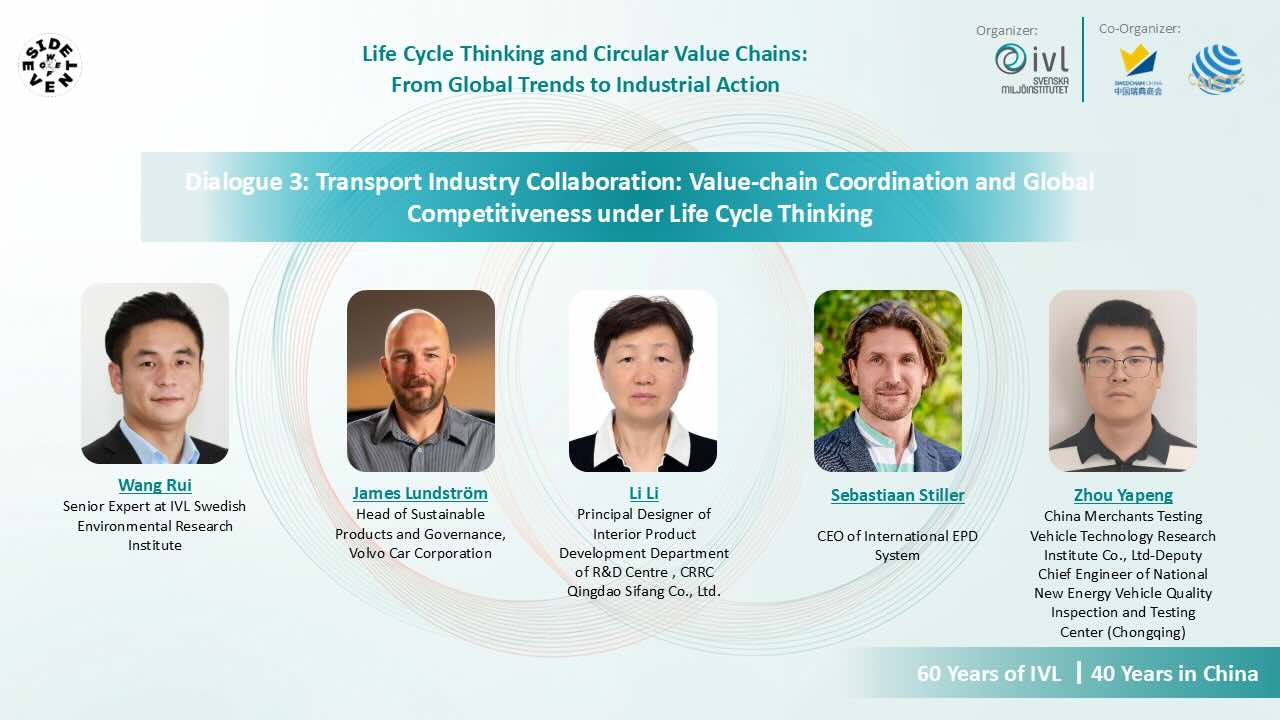
The third panel was moderated by Rui Wang, Senior Expert at IVL. Participants included Sebastiaan Stiller, CEO of the International EPD System; James Lundström, Head of Sustainable Products and Governance at Volvo Cars; Li Li, Principal Designer in the Interior Product Development Department of the R&D Centre at CRRC Qingdao Sifang Co., Ltd.; and Yapeng Zhou, Deputy Chief Engineer of the National New Energy Vehicle Quality Inspection and Testing Center (Chongqing) at China Merchants Testing Vehicle Technology Research Institute Co., Ltd. The discussion, “Transport Industry Collaboration: Value-chain Coordination and Global Competitiveness under Life Cycle Thinking”, explored how common rules, credible data and digital tools can improve coordination and global competitiveness across transport value chains. LCA for transport products is moving from generic emission factors to primary supplier data and from static calculations to automated and dynamic assessment. EPDs and digital tools can lower communication costs across supply chains, identify environmental hotspots during product design and support compliance in multiple markets. These efficiency gains still depend on common rules, measurable data quality and end-to-end traceability, with calculation, verification and expert judgement working effectively together to support greener collaboration across the value chain.
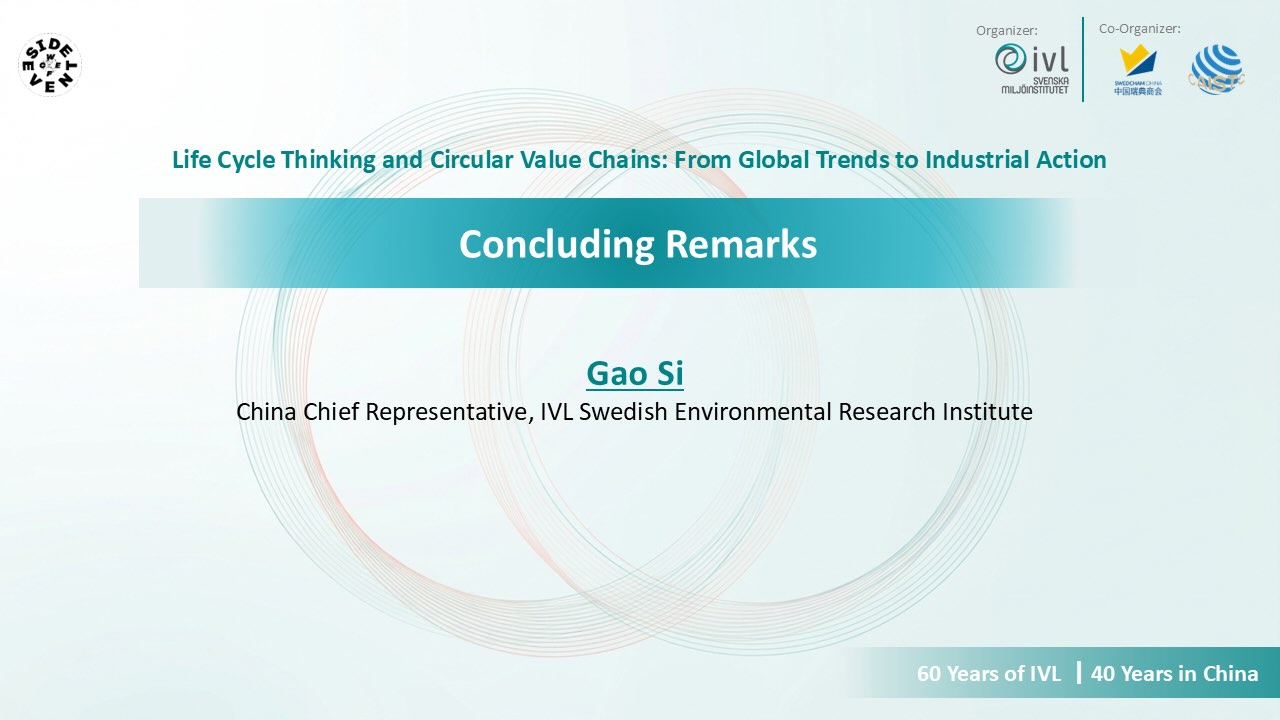
Si Gao, Chief Representative of IVL China, said in her concluding remarks that the changes achievable by a single sector or project are limited. Systematically integrating life cycle methods into supply-chain management is essential to amplify emissions reductions and broader environmental improvements. Building on IVL’s 60th anniversary and 40 years of engagement in China, IVL will work through the five thematic working groups under its Life Cycle Thinking Initiative to continue moving partnerships from individual projects towards long-term collaboration.
Circularity and industrial decarbonisation require technological progress as well as credible data, comparable methods, transparent rules, professional capacity and collaboration across value chains. Embedding life cycle thinking in policy, procurement, design and supply-chain management is essential for translating green electricity, recycled materials and digital tools into scalable and verifiable environmental outcomes.
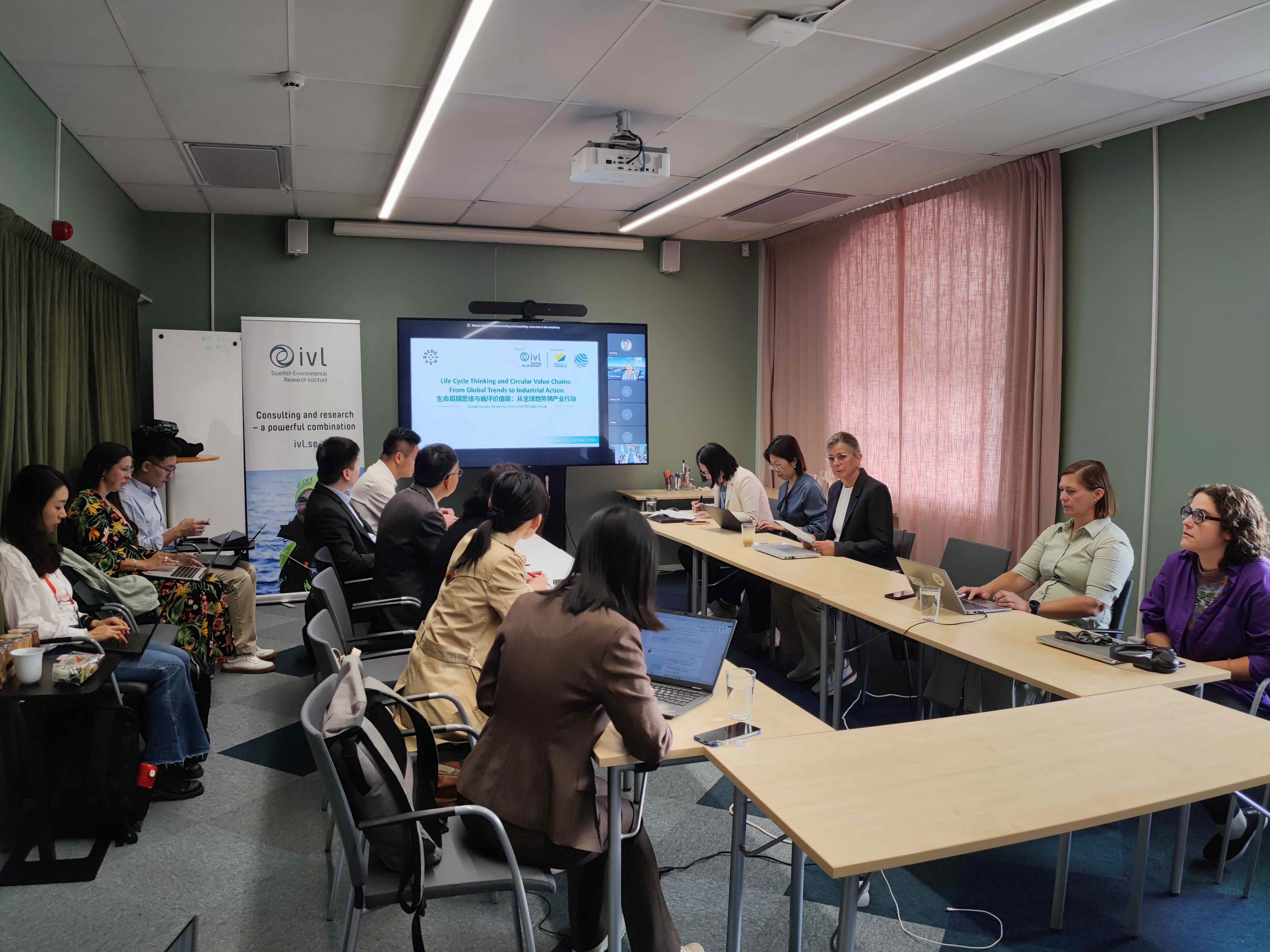
2026年9月2日,由IVL瑞典环境科学研究院主办、中国瑞典商会和中国国际科学技术合作协会(CAISTC)协办的世界循环经济论坛(World Circular Economy Forum,WCEF)边会“生命周期思维与循环价值链:从全球趋势到产业行动”在IVL斯德哥尔摩办公室举行。此次会议,适逢IVL成立60周年及在华开展工作40周年。会议采用线上线下相结合的方式,汇聚政府、国际组织、科研机构、行业协会和企业代表,围绕可持续发展趋势、可信低碳价值链和交通产业链协同转型展开交流。
IVL瑞典环境科学研究院执行副院长Anna Söderholm和中国驻瑞典大使馆科技参赞崔玉亭分别致开幕辞。Anna Söderholm在致辞中表示,生命周期思维要求决策者立足完整价值链,避免局部优化,并以可靠数据、透明规则和跨界合作推动循环转型落地。中国驻瑞典科技参赞崔玉亭指出,中瑞在碳足迹核算和绿色低碳转型方面具有良好合作基础,可进一步深化在这一领域的标准互认、联合研究、产业合作和人才交流。中国国际科学技术合作协会会长靳晓明通过云端致贺,肯定IVL在环境科学、生命周期评价、循环经济和绿色供应链领域的长期积累,并期待中欧拓展低碳发展、水资源等领域的务实合作。
第一场圆桌由IVL生命周期管理团队负责人Karin Sanne主持,联合国环境规划署生命周期倡议秘书长Llorenç Milà i Canals、IVL高级专家朱艳景、瑞典生命周期中心负责人Maria Rydberg、start2see Pty Ltd创始人兼总监Rob Rouwette和瑞典创新署首席分析师Nannan Lundin参与讨论。圆桌以“回顾环保低碳进展,探讨未来可持续趋势”为主题,对LCA数据的发展趋势和现实问题进行了分析。随着制度框架逐步建立,以及数字化和人工智能不断发展,生命周期思维正逐步进入日常决策,但数据碎片化、数据质量不确定性等问题仍然存在。在此背景下,资助机构已将关注重点拓展至可持续供应链,并统筹支持技术探索和示范项目规模化推广。
第二场圆桌由IVL中国区商务发展部主任姚娟娟主持,国际铝业协会环境、统计与标准经理吴琳琳、SSAB瑞典钢铁集团高级顾问Martin Pei、世界钢铁协会生命周期发展与整合总监Terrence Busuttil、中国欧盟商会碳市场工作组主席靳博阳,以及国家电投集团中国电能成套设备有限公司认证业务总监、电能(北京)认证中心有限公司董事张宇阳及其团队成员谢博参与讨论。圆桌聚焦“基础制造行业:钢铁与铝如何建立可信低碳价值链”,讨论基础材料深度脱碳的技术路径、数据基础和规则协同。钢铁和铝行业的深度脱碳需要同步推进电力和工艺减排、原生材料生产革新、循环利用与产品设计,并以清晰的系统边界和一致的核算原则避免回收效益重复计算。当前,核算体系互操作性不足、中欧规则差异和绿电属性认定仍带来合规压力,需要加强监测、报告与核查(MRV)、核查机构认可、EPD数据复用和数字化报送等方面的衔接,并以绿色采购和供应链平台将低碳要求传导至上下游。
第三场圆桌由IVL高级专家王瑞主持,国际EPD体系首席执行官Sebastiaan Stiller、沃尔沃汽车可持续产品与治理负责人James Lundström、中车青岛四方机车车辆股份有限公司技术中心车内开发部主审设计师李莉和招商局检测车辆技术研究院有限公司国家新能源汽车质量检验检测中心(重庆)副总工周亚鹏参与讨论。圆桌以“交通产业协同:生命周期思维下的产业链协同与全球竞争”为主题,探讨统一规则、可信数据和数字化工具如何提升交通产业链协同效率与全球竞争力。交通产品LCA正从通用排放因子转向供应商一手数据、从静态核算走向自动化和动态评估,EPD和数字化工具可降低供应链沟通成本、识别设计阶段的环境热点,并支持跨市场合规。数字化提效仍须以统一规则、量化的数据质量和全过程可追溯为前提,确保计算、核查和专家判断有效衔接,推动产业链绿色协同。
IVL瑞典环境科学研究院中国首席代表高思在总结中表示,单一行业或单个项目能够带来的改变有限,只有把生命周期方法系统纳入供应链管理,才能放大减排与环境改善成效。IVL将以成立60周年及在华开展工作40周年为新起点,依托生命周期思维倡议的五个专题工作组,持续推动伙伴关系从单个项目走向长期协同。
循环经济与产业脱碳既需要技术进步,也需要可信数据、可比方法、透明规则、专业能力和上下游协作。只有把生命周期思维嵌入政策、采购、设计和供应链管理,才能将绿色电力、再生材料和数字化工具转化为可规模化、可验证的环境成效。