
China Is Becoming A Global "Lighthouse" of Industrial AI Capability
China’s AI advantage is increasingly being built in the physical economy: on factory floors, in operating data, across supply chains, and inside industrial equipment. For MNCs, this makes China more than a rollout market. The question is not only how to deploy AI in China, but how to keep pace with, learn from, and transfer the industrial AI practices already emerging there.
中国的AI优势正日益在实体经济领域得到构建:从工厂车间、运营数据、供应链到工业设备内部。对跨国企业而言,这意味着中国已不只是全球AI战略的部署市场。问题不仅只是如何在中国部署AI,更在于如何跟上、学习并借鉴中国已经涌现的工业AI实践。
From February to April 2026, InterChina surveyed 85 industrial operators in China to understand how industrial AI is actually being used in production and logistics. Three findings confirmed what we expected, three surprised us, and one further pattern points to a bigger shift: China is becoming not just a market for AI deployment, but a global source of industrial AI capability.
2026年2月至4月,英特华(InterChina)对中国85家在华营商的工业企业进行了调研,以了解工业AI在生产和物流中的实际应用情况。调研结果中有三项发现验证了我们的预期,三项发现出乎我们的意料,还有一项趋势预示着更大的趋势转变:中国不再仅是AI部署市场,更将成为全球工业AI能力的重要来源地。
[What the survey confirmed]
1. Industrial AI is already here and momentum is strong
79% of respondents are at least exploring AI, and 34% have moved into pilot or scaling stages. Momentum is strong: 66% are planning new AI initiatives in the next 24 months, and 44% of those are targeting multi-site rollout rather than another isolated pilot.
The topic in China operations has moved from whether AI is relevant to how to effectively scale it.
2. Deployment is staying practical
Most AI today is bottleneck-led: quality inspection, throughput, predictive maintenance, planning, places where the problem is visible, the owner is clear, and ROI is provable.
Plant-wide orchestration is still not the reality for most companies and Physical AI remains a frontier capability with only 4% running it at scale across lines or sites today.
The lesson for MNCs is not to start with the most futuristic use case, start where the operational pain is visible.
3. For MNCs, integrated China–global organization is the deployment unlock
Similar to the findings in our China Business Forecast 2026: the China–global organizational gap is a recurring blocker for any serious capability play in China, and AI is no exception.
65% of leading MNCs operate with an integrated China–global team for AI; only 8% of laggards do.
The MNCs that scale AI are the ones that have built joint China–global teams with strong decision rights, real proximity to operations, and the trust to move fast.
【三个意料之中的判断验证】
1. 工业AI时代已经到来,并且发展势头强劲
79%的受访企业至少已经开始探索AI,34%已经进入试点或规模化阶段。发展势头强劲:66%的企业计划在未来24个月启动新的AI项目,其中44%计划进行多基地推广,而非再次开展孤立的试点项目。
在中国,AI的关注点已从是否相关转向如何有效规模化扩展应用。
2. AI部署仍需保持务实
如今大多数AI应用都集中在瓶颈领域:质量检测、产能提升、预测性维护、生产规划等,这些领域问题显而易见、责任明确,且投资回报率可验证。
整厂级协同运作对大多数企业而言仍是遥远的梦想,而物理AI仍是一项前沿技术能力,目前仅有4%的企业实现了跨产线或跨基地的规模化应用。
对跨国公司的启示是,AI 部署不必从最前沿的应用场景入手,而应该从实际运营中最清晰的痛点开始。
3. 对跨国企业而言,中国-全球一体化组织是AI部署之关键
正如我们在《2026年中国商业预测》中得出的结论:中国与全球之间的组织断层,是跨国企业在中国开展与构建任何重大能力建设的常见障碍,AI也不例外。
65%的领先跨国企业都组建了中国-全球一体化AI团队,而落后企业中这一比例仅为8%。
那些成功规模化AI业务的跨国企业,通过一体化的团队,从而具备清晰的决策权,得以真正贴近运营部门,并拥有快速推进所需的信任基础。
[What surprised us]
1. The Chinese–MNC value-realization gap is wider than expected
It is not surprising that Chinese operators are ahead in China. The size of the gap is 93% of Chinese respondents report measurable value from AI, against 57% of MNCs. Chinese firms also average a higher AI maturity and operate on much tighter payback expectations. To us this is not a tooling gap. It is an execution-tempo gap. Chinese operators cut over to AI faster and accept earlier value capture as proof.
2. AI is being used as a cost tool more broadly than expected
We expected AI deployment in China to be practically driven. The totality of it surprised us. 77% of reported AI benefits map to direct or indirect cost reduction levers; less scrap, faster cycle time, lower energy per unit, lower labor cost, higher uptime. Industrial AI in China is, today, also a cost optimization tool. It belongs in the cost playbook, not only the innovation portfolio.
3. Standardization of AI approaches is a crucial scale enabler
Among firms that have reached an AI pilot or scaling stage, 72% have a standardized AI deployment approach. Among those still lagging behind, only 32% do. Standardization appears to be one of the strongest scale enablers. The common assumption is “pilot first, standardize later”. The data points the other way: standardization comes first, or pilots struggle to move beyond isolated cases.
【三个意料之外的发现】
1. 中国企业与跨国企业价值实现差距大于比预期
中国企业在AI领域领先并不令人意外,但差距之大却令人惊讶。93%的中国受访企业表示AI带来了可衡量的价值,而在跨国企业中这一比例为57%。
中国企业在AI成熟度方面也更胜一筹,并且对投资回报的预期也更为严格。我们认为,这并非工具上的差距,而是执行速度上的差距。
中国企业能够更快地将AI从试点切换到运营应用,并将更早实现的价值获取视为成功的证明。
2. AI作为一种成本控制工具的应用范围超出预期
我们原本预期AI在中国的部署将以实用性为主导,但其整体规模却出乎我们的意料。据调研结果,77%的AI收益都体现在直接或间接的成本降低上,例如减少废料、缩短生产周期、降低单位能耗、减少人工成本以及提高设备正常运行时间。
如今,工业AI在中国也已成为一种成本优化工具,它不仅是创新组合的一部分,更应纳入企业成本管理策略之中。
3. AI方法的标准化或将是实现规模化的关键推动因素
在已进入AI试点或规模化阶段的企业中,72%的企业拥有标准化的AI部署方法。而在仍落后的企业中,只有32%的企业拥有标准化的AI部署方法。标准化似乎是推动规模化的最有效因素之一。
通识假设认为“先试点,再标准化”,但实际数据却指向相反的方向:标准化应该先行,否则试点项目很难摆脱孤立案例的局限。
[Strategic pattern: Chinese industrial AI is becoming a global “lighthouse”]
For MNCs, there is one further pattern, and it is the one with the longest strategic shadow. Among MNC leaders, the dominant direction of AI know-how transfer is no longer global-to-China. It is China-to-global, practices proven in Chinese factories being codified and rolled out to plants in other regions. 45% of leading MNCs report AI know-how flowing mostly from China to global, with another 35% reporting bidirectional flow. Among laggards, more than half report no transfer at all.
【战略格局:中国工业AI,正在成为全球“灯塔”】
对跨国公司而言,还有一个更深远的模式正在显现。在领先跨国公司中,AI Know-how 技术转移的主导方向已不再是全球向中国转移,而是反之,即在中国工厂中验证有效的实践被系统化并推广到全球其他地区的工厂。45%的领先跨国企业表示,AI Know-how技术主要从中国流向全球,另有35%的企业表示存在双向流动。而在落后的企业中,超过半数的企业表示根本没有进行任何技术转移。
This is InterChina’s broader 3D China logic in action: China not only as a market and cost-efficient operating base, but as a source of innovation, capability, and operating practices that can travel globally. For leading MNCs, China is no longer only where AI is deployed, it is where industrial AI playbooks are being built and converted into a global operating advantage.
这正是英特华更广义的“三维中国 (3D China)”逻辑的体现:中国不仅是市场和具备成本效率的运营基地,也正在成为创新、能力和可全球复制的运营实践来源。对于领先的跨国企业而言,中国不再仅仅是一个AI部署市场,更是构建工业AI战略并将其转化为全球运营优势的地方。
The "Industrial AI in China 2026" report was launched during InterChina and Rockwell Automation collaborative exclusive seminar on May 7, 2026 at Rockwell Automation Shanghai innovation centre.
《2026中国工业AI洞察报告》(简称《报告》)于5月7日在英特华与罗克韦尔自动化联合主办「中国工业AI部署现状」闭门高管研讨会上发布。
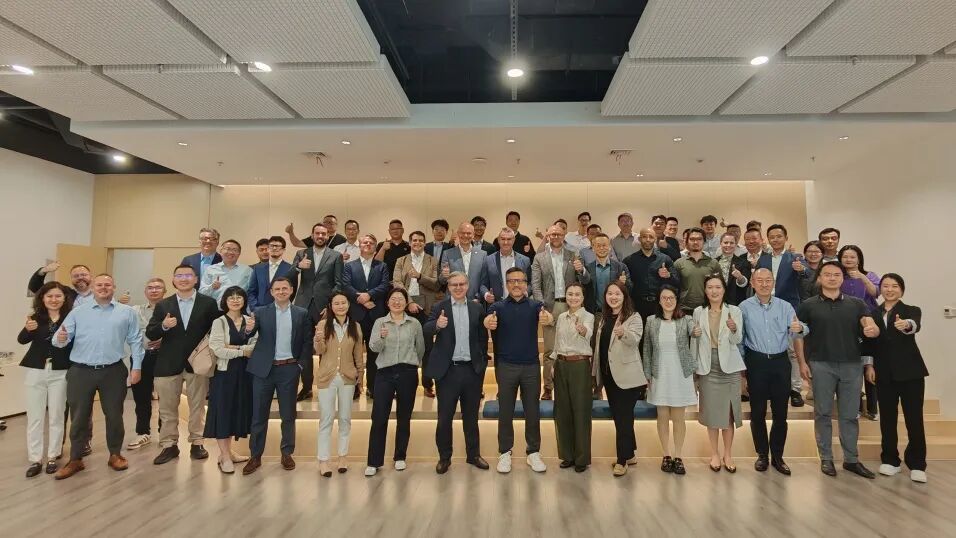
Special thanks to our speakers, Franc Kaiser, Partner in Charge at InterChina and Ian Shih, Regional Vice President, Greater China of Rockwell Automation, sharing such insightful keynotes on AI deployment, success factors and best practices for industrial adoption.
我们特别感谢Franc Kaiser(英特华管理合伙人)、Ian Shih 石安(罗克韦尔自动化中国区总裁)作为主讲嘉宾,分享AI在工业领域落地的真实路径、关键成功要素及规模化部署策略及最佳实践,为中国及全球制造业的智能化转型提供前沿洞察。